Bottled vampire blood
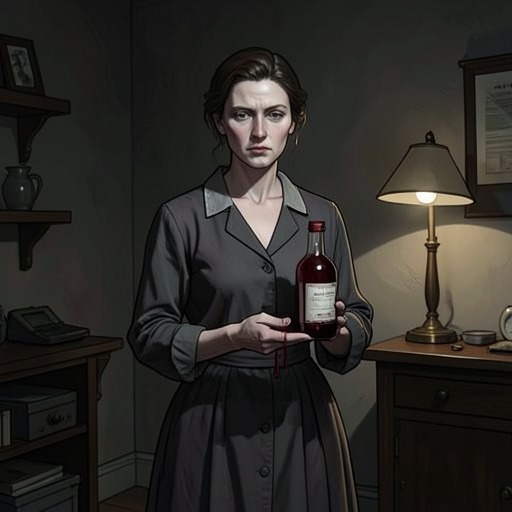
The RadleysBottled vampire blood is both a consumable product and a recurring test of the Radleys’ commitment to abstention. Will Radley presents it as accessible, pleasurable, and capable of opening a more powerful life; Rowan Radley experiences its immediate appeal and relief, then confronts the cravings and choices that follow. Its significance lies in this shift from an object offered by Will to a temptation Rowan must carry for himself.
Product and place in vampire life
Vampire blood is presented as a particularly satisfying form of nourishment for vampires: compared with blood from an unconverted human, its taste is described as more complex and bolder. Blood taken just after a person’s conversion is considered the most desirable kind. Bottled vampire blood therefore belongs to a broader vampire economy of consumption, one that offers a substitute for killing but does not resolve the underlying appetite. The warning in The Abstainer’s Handbook (second edition) is that blood magnifies cravings rather than satisfying them.
Will’s own habits illustrate the difference between drinking bottled blood and practising restraint. Although he has little interest in converting people, he drinks bottles of vampire blood and also feeds on Isobel Child, his on-and-off girlfriend. His appetite nevertheless grows increasingly difficult to contain: he bites people he chooses, including vampires and unconverted humans, and behaves recklessly about the risk of being seen. The bottle is thus not evidence of a settled balance. In Will’s case, access to vampire blood coexists with escalating predation.
The product also has an ordinary commercial presence. Will tells Peter Radley that vampire blood can be obtained in Manchester at The Black Narcissus, a nightclub run by the Sheridan Society. He describes bottles sold by a cloakroom attendant for twenty pounds, while noting that the police do not interfere with the venue. This account makes bottled blood seem available through a discreet, established network, rather than an exceptional or private supply. Its normality is part of its appeal, but it does not make the practice harmless.
Will’s offers and Rowan’s hesitation
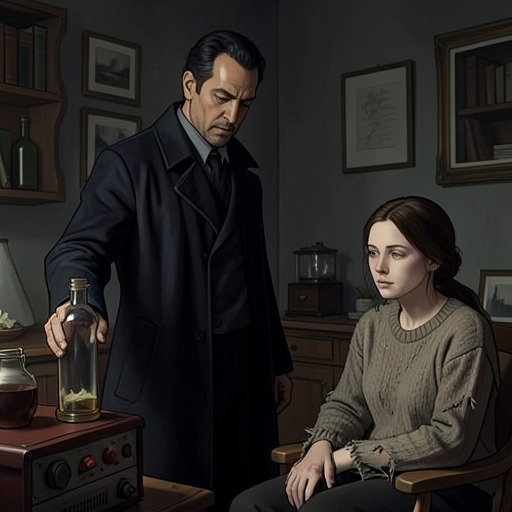
Will first uses the bottle to appeal to Peter through their shared past. He gestures toward it as an alternative to wine and frames drinking together as a return to old times. Peter visibly struggles with the proposal before refusing and going to bed. The bottle makes Will’s invitation tangible: Peter is not being asked merely to reconsider abstention in theory, but to accept the drink in front of him. His refusal is a moment of resistance rather than proof that the temptation has disappeared.
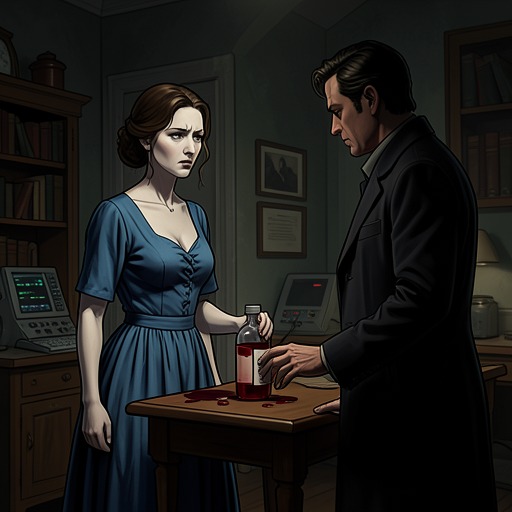
Will later turns the same persuasive method toward Rowan. He uses the label on a bottle to invoke Byron and Isobel Child, then links drinking to powers and confidence Rowan might want. He suggests that vampire blood could help Rowan fly and that tasting Isobel might make him more attractive and self-assured around a girl he likes. Rowan thinks of Eve Copeland and recognizes the pull of the offer, even as he hesitates. Will’s pitch recasts drinking as a route to possibility and desirability, not simply as feeding.
Rowan takes the bottle almost without thinking. Will responds with pride and presents the wider vampire world as something now available to him. Rowan says he will take it and consider it, but the exchange has already changed the terms of his choice: the temptation is no longer remote, because the bottle is in his possession. Later, he sits with it in his bedroom and wonders whether he could take only a small sip. He hides it under his bed when he hears Clara Radley leaving her room, placing it beside an old papier-mâché puppet he made as a child. The concealment gives the bottle a private, illicit place in the family home.
Rowan and Clara: first drinking and immediate relief
When Clara is upset about the family’s revelations and the consequences of her killing Stuart Harper, Rowan brings out the bottle. He says Will gave it to him and that he has not drunk from it. Clara opens it, drinks, and returns it to him after saying that she feels better. The moment joins the bottle to a change in her state: the worry that had remained despite Rowan’s attempt to comfort her no longer shows in her expression. Her response also affects Rowan’s decision. She appears able to drink and then stop, presenting self-control as possible even while the blood is attractive to her.
Rowan’s first drink follows a different emotional route. He remembers being attacked by Harper at school, pinned down while other boys laughed, including Toby Felt. In that memory, Rowan had wanted not to fight back but to disappear into the earth. Thinking of Harper, he picks up the bottle and drinks. The decision connects the object to accumulated humiliation and distress rather than to Will’s promises of flight or romantic confidence.
The immediate effect is powerful. Rowan’s worries and tension recede, his familiar aches and ailments disappear, and he feels newly awake. That rapid relief helps explain the force of the bottle’s appeal, but it also sharpens the contrast with the handbook’s warning: temporary ease does not mean the craving has been settled. The bottle offers a short-term change in how Rowan feels while making a return to the drink more conceivable.
Departure, discovery, and renewed temptation
When Will is preparing to leave for good with his bottles, Clara worries that the family will be left with cravings and no supply. Rowan insists that they can control themselves as before; Clara counters that they cannot undo knowing what the blood is like. Their disagreement gives the bottle a consequence beyond the first drink. Even as a supply that can be removed, it has changed what the siblings know and what they expect from abstention.
Rowan later searches Will’s van for vampire blood. He finds one empty bottle and an unopened bottle inside a rolled sleeping bag, which he takes. As he does so, the lid comes off a shoebox and exposes the family’s phone number and photographs. The blood hunt therefore occurs beside a discovery of family evidence: the sought-after object and the materials that reveal Rowan’s parentage occupy the same concealed space. Later, when Will reaches for the sleeping bag, he finds only its soft padding; the shoebox is open, with a letter and a photograph of Rowan on the floor. The missing bottle and exposed family materials mark the van as a place where appetite and hidden kinship intersect.
The bottle’s appeal is finally set against a different use of blood. When Eve is gravely injured, Rowan asks his father to give her blood, and Helen explains that blood used to save her would turn her into a vampire and could create strong feelings toward the person whose blood was used. Eve asks for Rowan’s blood. He gives it from a cut in his palm, and she recognizes him through the intimate bond that follows. This is not bottled blood offered for consumption: it is Rowan’s blood, given to save Eve and bring about her conversion.
At the close, Rowan is again confronted with a bottle. After spending hours dealing with the stench of household waste, he considers the bottle’s aroma and weighs it against everything he has told himself about abstention. He reasons that a tiny sip might be harmless; then the bottle reaches his lips. The ending returns the object to its central uncertainty. Earlier relief, family conflict, and the distinction between restraint and renewed drinking have not made the temptation vanish; the final approach to the bottle leaves Rowan’s choice unresolved.